
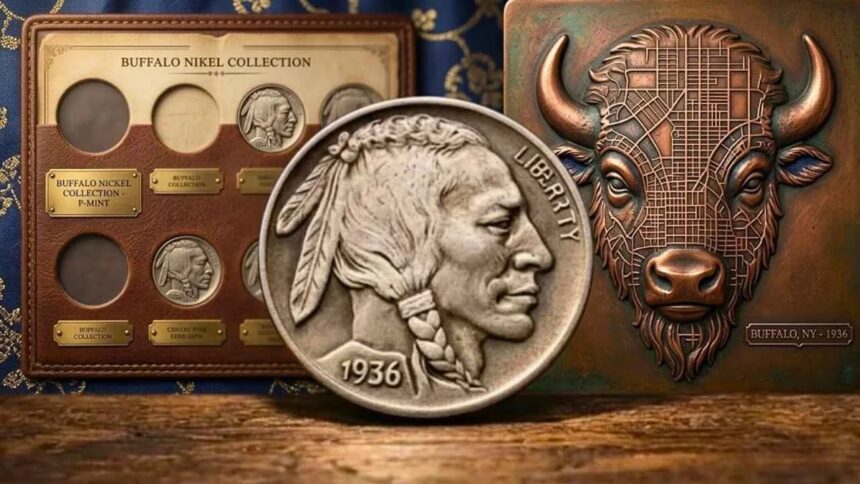
The 1936 Buffalo Nickel remains one of the most admired coins among American collectors in 2026. Known for its bold Native American portrait and iconic buffalo design, this five-cent coin represents a classic era in United States coinage. While millions of Buffalo Nickels were produced during the early twentieth century, certain dates and conditions continue attracting serious collector attention, including the popular 1936 no mint mark issue.
- The History of the Buffalo Nickel
- Understanding the 1936 No Mint Mark Buffalo Nickel
- Why the 1936 Buffalo Nickel Is Popular
- How to Identify a 1936 No Mint Mark Buffalo Nickel
- How Condition Affects Value
- Rare 1936 Buffalo Nickel Varieties
- Why Buffalo Nickels Wear Down So Easily
- Tips for Collectors in 2026
- Why Buffalo Nickels Remain Strong Investments
- Protecting and Storing Valuable Nickels
- Final Thoughts
Collectors value the 1936 Buffalo Nickel not only for its artistic beauty but also for its historical importance and growing market demand. Although many examples remain affordable for beginners, high-grade specimens and rare varieties can command impressive prices.
For anyone interested in coin collecting, understanding the value, identification features, and rarity of the 1936 Buffalo Nickel can help reveal why this coin remains one of the most collectible nickels in American history.
The History of the Buffalo Nickel
The Buffalo Nickel, officially called the Indian Head Nickel, was introduced in 1913 and designed by sculptor James Earle Fraser.
The obverse side features a Native American profile created using elements from several tribal leaders Fraser studied. The reverse side displays a powerful American buffalo standing on a raised mound.
The design quickly became one of the most recognizable in American coinage history because it captured the spirit of the American West.
Buffalo Nickels were produced until 1938, when they were replaced by the Jefferson Nickel series.
Today, collectors continue appreciating Buffalo Nickels because of their artistic quality and connection to early American history.
Understanding the 1936 No Mint Mark Buffalo Nickel
The 1936 Buffalo Nickel without a mint mark was produced at the Philadelphia Mint.
Unlike coins struck at Denver or San Francisco, Philadelphia issues from that period generally carried no mint mark. This often causes confusion among new collectors who mistakenly believe the absence of a mint mark automatically makes a coin rare.
Although the 1936 no mint mark nickel had a relatively large mintage, collector demand remains strong because many surviving examples experienced heavy circulation.
Well-preserved coins with sharp details are much scarcer than worn examples, making condition extremely important when determining value.
Collectors especially seek coins displaying strong design elements and original surfaces.
Why the 1936 Buffalo Nickel Is Popular
Several factors contribute to the popularity of the 1936 Buffalo Nickel.
First, the coin belongs to one of the most visually admired series ever produced by the U.S. Mint. The detailed buffalo and Native American portrait continue attracting collectors of all experience levels.
Second, the 1936 issue is relatively accessible compared to ultra-rare Buffalo Nickel dates, allowing new collectors to own a historic coin without spending enormous amounts.
Third, high-grade examples can still become surprisingly valuable because Buffalo Nickels often wore down quickly in circulation.
Collectors appreciate the balance between affordability and investment potential that the 1936 issue offers.
How to Identify a 1936 No Mint Mark Buffalo Nickel
Correct identification begins with checking the date and mint mark location carefully.
The date “1936” appears on the obverse side near the Native American’s shoulder. Coins struck at Philadelphia show no mint mark beneath the denomination on the reverse side.
Denver Mint coins display a small “D,” while San Francisco coins feature an “S.”
Collectors should also examine the condition of key design areas, especially the buffalo’s horn and the Native American’s hair braid. These features often wear down first on circulated examples.
Using magnification can help reveal surface details, scratches, or possible mint errors.
How Condition Affects Value
Condition plays the biggest role in determining the value of a 1936 Buffalo Nickel.
Circulated examples with heavy wear remain relatively affordable because many survive in lower grades. However, coins with sharp details and minimal wear become significantly more valuable.
Collectors especially seek coins displaying full horn details on the buffalo. On worn examples, the horn may appear faint or completely missing.
Original mint luster also increases desirability. Coins retaining their natural shine and surface texture often command higher premiums.
Professional grading companies evaluate Buffalo Nickels using detailed standards that greatly influence market prices.
Even a small increase in grade can create a major jump in value for well-preserved specimens.
Rare 1936 Buffalo Nickel Varieties
While the standard 1936 no mint mark issue is popular, certain varieties and errors attract even greater collector interest.
One famous variety is the 1936 “Doubled Die Obverse” Buffalo Nickel. This error displays visible doubling on lettering and design elements caused during die production.
Collectors also search for repunched mint marks, die cracks, and off-center strikes involving 1936 nickels.
Although such errors are less common than regular issues, they can become highly valuable depending on visibility and condition.
Because Buffalo Nickels circulated heavily, finding dramatic error examples in strong condition remains difficult.
Why Buffalo Nickels Wear Down So Easily
One challenge for Buffalo Nickel collectors is the series’ tendency toward rapid wear.
The raised date and design details were particularly vulnerable to friction during circulation. As a result, many Buffalo Nickels lost important features after years of use.
This explains why sharply detailed examples are much scarcer today than mintage numbers might suggest.
Collectors often pay strong premiums for coins with fully visible dates, strong facial details, and complete buffalo horns.
Some collectors even specialize in high-grade Buffalo Nickels because of the challenge involved in locating well-preserved examples.
Tips for Collectors in 2026
Collectors searching for valuable 1936 Buffalo Nickels should pay close attention to surface quality and originality.
Avoid coins that appear heavily polished or cleaned because cleaning can permanently reduce collector value.
Natural toning and aging are generally preferred over artificially bright surfaces.
Buying certified coins from reputable grading companies can help reduce the risk of altered or counterfeit examples.
Collectors should also study genuine examples to better understand grading standards and design details.
Coin shows, online collector communities, and numismatic references remain valuable educational resources for beginners.
Why Buffalo Nickels Remain Strong Investments
Buffalo Nickels continue attracting collector demand because they combine historical appeal with limited surviving high-grade populations.
As more collectors enter the hobby in 2026, demand for classic U.S. coins remains healthy.
Unlike modern coins produced in massive numbers and often preserved immediately, Buffalo Nickels circulated heavily during difficult periods of American history, including the Great Depression.
This real-world use gives surviving high-quality examples greater scarcity and historical charm.
Collectors appreciate that Buffalo Nickels represent both art and history in a compact, affordable form.
Protecting and Storing Valuable Nickels
Proper storage helps preserve the condition and value of Buffalo Nickels.
Coins should be handled carefully by the edges to avoid fingerprints and surface damage.
Protective holders, coin flips, or certified slabs help shield coins from moisture and environmental exposure.
Collectors should avoid storing coins in humid environments because corrosion and discoloration can develop over time.
Long-term preservation is especially important for older nickel coins because surface damage can greatly affect market value.
Final Thoughts
The 1936 Buffalo Nickel no mint mark remains one of the most attractive and collectible coins in American numismatics. While common circulated examples remain affordable, well-preserved coins and rare varieties continue commanding strong prices in 2026.
Collectors appreciate the coin’s artistic beauty, historical significance, and connection to a classic era of U.S. coinage. Whether discovered in an old collection or purchased from a dealer, the 1936 Buffalo Nickel continues holding a special place in the world of rare coin collecting.