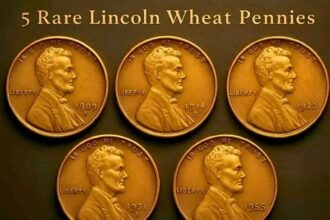

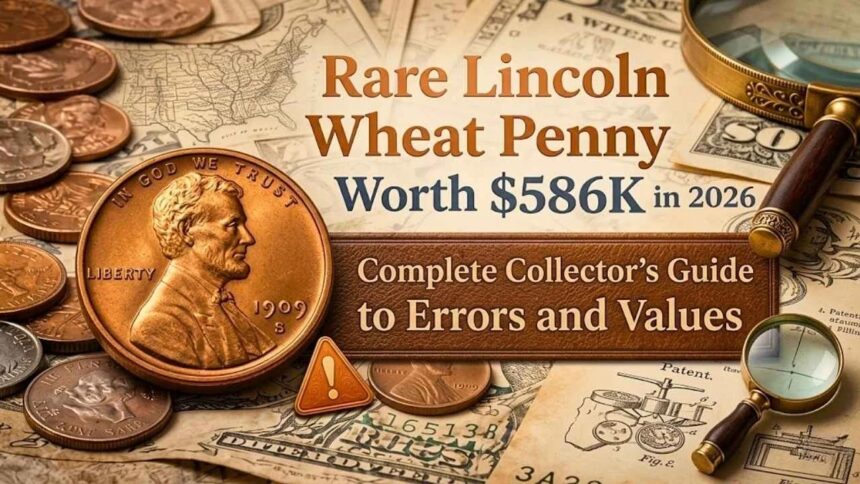
Lincoln Wheat Pennies continue to dominate the rare coin market in 2026, with some extraordinary examples reaching jaw-dropping prices at auctions. Among the most talked-about coins this year is a rare Lincoln Wheat Penny reportedly valued at an incredible $586,000. What once circulated as an ordinary one-cent coin has now become a dream discovery for collectors across the world.
- The History Behind the Lincoln Wheat Penny
- Why Some Wheat Pennies Are Worth So Much
- The Legendary 1943 Copper Penny
- The Famous 1955 Doubled Die Penny
- The Rare 1909-S VDB Wheat Penny
- Understanding Mint Marks
- Why Condition Matters So Much
- Common Errors Collectors Search For
- How to Protect Valuable Wheat Pennies
- Why Wheat Pennies Remain Popular in 2026
- Final Thoughts
The excitement surrounding Wheat Pennies comes from the fact that many valuable coins were once part of everyday circulation. Some were saved unknowingly in jars or drawers for decades, while others remain hidden inside old collections waiting to be rediscovered. Rare mint errors, low mintages, and exceptional preservation have transformed a few Lincoln cents into some of the most valuable small coins in American history.
For collectors and coin enthusiasts, understanding what makes certain Wheat Pennies so valuable is essential. From famous minting mistakes to rare key dates, these coins continue attracting strong demand in the modern numismatic market.
The History Behind the Lincoln Wheat Penny
The Lincoln Wheat Penny first appeared in 1909 to celebrate the 100th anniversary of Abraham Lincoln’s birth. It became the first regular U.S. coin to feature an actual historical figure instead of symbolic imagery.
Designed by Victor David Brenner, the coin features Lincoln’s portrait on the front and two wheat stalks on the reverse side. The Wheat Penny design remained in circulation until 1958 before being replaced by the Lincoln Memorial reverse in 1959.
Collectors admire Wheat Pennies because they represent an important period in American history. These coins circulated during major national events including World War I, the Great Depression, and World War II.
Their historical importance, combined with the possibility of discovering valuable rarities, keeps collector interest extremely strong in 2026.
Why Some Wheat Pennies Are Worth So Much
Most Lincoln Wheat Pennies remain common and affordable, but certain coins become extremely valuable because of several key factors.
Low mintage numbers create scarcity. Coins produced in limited quantities naturally become harder to find over time.
Minting errors also play a huge role. Doubled dies, off-metal strikes, missing mint marks, and other unusual mistakes often turn ordinary pennies into collector treasures.
Condition is another major factor. Most Wheat Pennies circulated heavily, causing scratches, fading, and worn details. Coins surviving in nearly flawless condition are much rarer than many people realize.
Historical significance also increases demand. Pennies connected to wartime production changes or famous minting errors continue attracting collectors worldwide.
The Legendary 1943 Copper Penny
One of the most valuable Lincoln Wheat Pennies ever discovered is the famous 1943 copper cent.
During World War II, the U.S. Mint changed penny production from copper to zinc-coated steel to conserve copper for military supplies. As a result, nearly all 1943 pennies appear silver-colored rather than brown.
However, a small number of leftover copper planchets from 1942 accidentally remained in the presses and were struck with the 1943 date.
These accidental copper pennies became legendary among collectors because only a few authentic examples exist. Some have sold for hundreds of thousands of dollars, while elite specimens continue setting new records.
Many experts believe the coin linked to the $586,000 valuation belongs to this rare wartime error category.
Collectors often test suspected examples with a magnet because genuine copper pennies do not stick while steel cents do.
The Famous 1955 Doubled Die Penny
Another highly valuable Wheat Penny is the 1955 Doubled Die cent.
This coin became famous because of dramatic doubling visible on the date and lettering. The words “LIBERTY” and “IN GOD WE TRUST” appear strongly doubled, making the error easy to identify even without magnification.
The mistake occurred during the die manufacturing process, and thousands of coins entered circulation before the Mint recognized the issue.
Collectors immediately became fascinated by the unusual appearance of the coin, and demand has remained strong for decades.
Well-preserved examples continue bringing impressive prices at major auctions in 2026.
The Rare 1909-S VDB Wheat Penny
The 1909-S VDB remains one of the most iconic key dates in the Lincoln cent series.
Produced at the San Francisco Mint during the first year of Wheat Penny production, this coin displays designer Victor David Brenner’s initials “VDB” on the reverse side.
Public criticism over the size of the initials led the Mint to quickly remove them, resulting in a very limited production run.
Collectors identify this coin by locating the “S” mint mark beneath the date and the “VDB” initials at the reverse bottom.
High-grade examples remain incredibly valuable because relatively few survive in pristine condition.
Understanding Mint Marks
Mint marks are one of the first things collectors examine when evaluating Lincoln Wheat Pennies.
Coins from Philadelphia generally display no mint mark, while Denver issues feature a “D” and San Francisco coins carry an “S.”
Certain mint marks are far scarcer than others depending on the year. For example, a common date from Philadelphia may be worth only a small amount, while the same year from San Francisco could command significant value.
Collectors carefully compare mint mark placement, shape, and authenticity because counterfeit coins sometimes contain altered mint marks.
Why Condition Matters So Much
Condition plays a massive role in determining Wheat Penny values.
Collectors especially seek coins with strong details, original mint luster, and full red copper color. Older copper coins naturally darken over time, making bright red examples much scarcer.
Professional grading companies evaluate coins based on surface quality, strike sharpness, and eye appeal.
A tiny difference in grade can create enormous price differences. A rare penny graded Mint State 66 may sell for dramatically more than a similar coin graded Mint State 63.
Because high-grade Wheat Pennies are difficult to find, elite specimens remain highly competitive at auctions.
Common Errors Collectors Search For
Error coins continue attracting enormous attention among Wheat Penny collectors.
Doubled dies remain especially popular because the design appears visibly duplicated. Off-center strikes, clipped planchets, and die cracks are also collectible.
Some coins were accidentally struck on the wrong metal blanks, creating highly unusual and valuable errors.
Collectors use magnification tools to inspect dates, lettering, and mint marks carefully for hidden varieties.
Professional authentication is often recommended for major errors because counterfeit and altered coins exist in the marketplace.
How to Protect Valuable Wheat Pennies
Proper storage is essential for preserving coin value.
Collectors should avoid cleaning coins because polishing can permanently damage surfaces and reduce collector appeal.
Coins should be handled by the edges to avoid fingerprints and stored in protective holders or certified slabs.
Copper coins are especially sensitive to moisture and environmental exposure, making careful storage important for long-term preservation.
Why Wheat Pennies Remain Popular in 2026
Lincoln Wheat Pennies continue attracting collectors because they combine history, affordability, and treasure-hunting excitement.
Unlike rare gold coins hidden away in private collections, Wheat Pennies were ordinary coins once used by millions of Americans.
The possibility that a valuable penny could still be sitting unnoticed in an old collection keeps the hobby exciting for beginners and experienced collectors alike.
Online auctions, social media, and collector communities have also helped increase awareness of rare Wheat Penny varieties in recent years.
Final Thoughts
Rare Lincoln Wheat Pennies continue proving that even the smallest coins can carry enormous value. Whether it is the legendary 1943 copper cent, the iconic 1955 Doubled Die, or the famous 1909-S VDB, these historic pennies remain among the most sought-after collectibles in American numismatics.
The remarkable $586,000 valuation attached to one elite Wheat Penny highlights the continuing demand for rare coins in 2026. For collectors, every old penny still carries the possibility of becoming a life-changing discovery hidden in plain sight.