
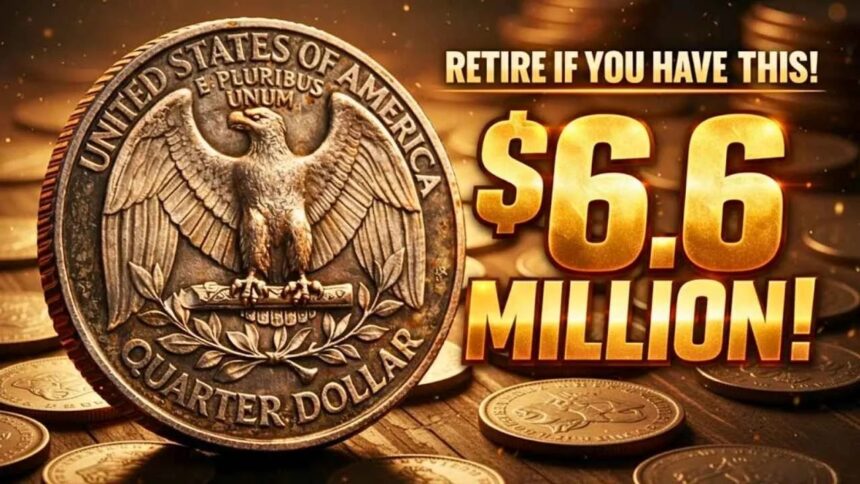
Quarter coins have been part of everyday American life for more than two centuries. Most people use them for parking meters, vending machines, or small purchases without giving them much thought. Yet some rare U.S. quarters have become incredibly valuable collector items worth thousands or even hundreds of thousands of dollars.
What makes these coins so fascinating is that many were once ordinary circulation pieces. Some gained value because of low mintages, while others became famous due to minting errors or historical importance. Today, collectors spend years searching through coin shops, estate sales, and even pocket change hoping to uncover one of these hidden treasures.
For anyone interested in coin collecting, rare quarters offer an exciting mix of history, artistry, and investment potential. Here are seven of the most valuable U.S. quarter coins every collector should know about.
1932-D Washington Quarter
The 1932-D Washington Quarter is one of the most important coins in the Washington quarter series. It was released during the first year the Washington design appeared and had a very low production number at the Denver Mint.
Only a small quantity was produced compared to later years, making it extremely difficult to find today. Many examples circulated heavily during the Great Depression, so high-grade coins are especially rare.
Collectors can identify this coin by looking for the “D” mint mark on the reverse side beneath the eagle. Even worn examples often sell for substantial amounts, while uncirculated coins can command impressive auction prices.
This coin remains a key piece for anyone attempting to build a complete Washington quarter collection.
1932-S Washington Quarter
Another legendary coin from the same year is the 1932-S Washington Quarter. Produced at the San Francisco Mint, this quarter also had a very limited mintage.
Because so few were made, demand among collectors has remained strong for decades. Coins in excellent condition are especially valuable because many were heavily used in circulation.
The “S” mint mark beneath the eagle helps distinguish this rare quarter from more common versions. Collectors often search for examples with sharp details and original silver luster.
The 1932-S and 1932-D quarters are often considered the foundation of serious Washington quarter collections.
1950-D/S Overmintmark Quarter
Mint error coins have always fascinated collectors, and the 1950-D/S overmintmark quarter is one of the most famous examples.
This unusual error occurred when a Denver mint mark was stamped over a San Francisco mint mark on the die. As a result, traces of both mint marks can be seen under magnification.
Collectors value this quarter because it represents a rare production mistake from the U.S. Mint. The overlapping mint marks create a distinctive appearance that makes the coin highly collectible.
Although not as rare as some earlier quarters, high-grade examples remain difficult to find and can sell for strong prices.
1964 Silver Washington Quarter
The 1964 Washington Quarter holds special significance because it was the last regular-issue quarter struck with 90% silver for circulation.
After 1964, rising silver prices forced the U.S. Mint to switch to copper-nickel clad coins. Because of this transition, silver quarters from 1964 remain popular among both collectors and precious metal investors.
Most circulated examples are worth more than face value simply because of their silver content. However, coins in pristine condition or with rare mint errors can be worth significantly more.
Collectors often check the edge of the coin to identify silver quarters. Unlike modern quarters with visible copper layers, genuine silver quarters display a solid silver-colored edge.
1970-S Small Date Quarter Error
The 1970-S Small Date quarter is a fascinating and lesser-known collectible. Certain proof quarters from San Francisco were accidentally struck using a rare “small date” design variation.
These subtle differences in the numbers of the date make the coin highly desirable to specialists. Because the variation is difficult to spot without experience, many collectors overlook it entirely.
Proof coins are known for their mirror-like surfaces and sharp details, but rare varieties like the small date version command much higher premiums.
Collectors often use magnification to compare date shapes and lettering styles when identifying these valuable quarters.
1976 Bicentennial Silver Quarter
The 1776–1976 Bicentennial Quarter is one of the most recognizable coins ever produced in the United States. Created to celebrate America’s 200th anniversary, the coin features a unique drummer boy design on the reverse side.
While most Bicentennial Quarters are common, special silver versions struck in San Francisco are much more collectible. These coins contain 40% silver and were produced primarily for collector sets.
High-grade silver proof examples can sell for hundreds or even thousands of dollars depending on condition and rarity.
Collectors should check for the “S” mint mark and examine the edge for solid silver coloring rather than the copper stripe found on regular clad coins.
2004 Wisconsin Extra Leaf Quarter
Modern quarters can also become valuable, and the 2004 Wisconsin State Quarter is one of the best examples.
This coin became famous because of an unusual mint error involving an extra leaf on the corn stalk featured in the reverse design. Some coins display an additional leaf pointing upward, while others show one pointing downward.
The error likely resulted from accidental die damage during production. Because the mistake created two distinct varieties, collectors quickly began searching for both versions.
The Wisconsin Extra Leaf quarter gained nationwide attention after examples were discovered in circulation. Today, well-preserved coins continue selling for significant amounts.
It remains one of the most popular modern error quarters among collectors.
Why Rare Quarters Become So Valuable
Several factors determine why certain quarters become worth large amounts of money. Low mintage numbers create scarcity, while mint errors make coins unique and difficult to duplicate.
Historical significance also increases collector interest. Coins tied to major events or important transitions in U.S. coinage often attract stronger demand.
Condition is another major factor. Coins with sharp details, original surfaces, and minimal wear usually command far higher prices than damaged or heavily circulated examples.
Professional grading services help authenticate coins and assign condition grades that strongly influence market value.
Tips for Identifying Valuable Quarters
Collectors searching for rare quarters should pay close attention to dates, mint marks, and unusual design features.
Using a magnifying glass can help reveal small details such as doubled lettering, overmintmarks, or extra design elements. Checking the edge of older quarters can also identify silver content.
Avoid cleaning coins because polishing or scrubbing can reduce their value dramatically. Proper storage in protective holders helps preserve condition over time.
Many collectors search bank rolls, estate sales, and inherited collections because valuable quarters still occasionally appear in unexpected places.
Final Thoughts
Rare U.S. quarter coins continue attracting collectors because they combine history, rarity, and the thrill of discovery. From classic silver Washington quarters to modern mint errors like the Wisconsin Extra Leaf variety, these coins prove that everyday pocket change can sometimes hold extraordinary value.
While most quarters remain worth only twenty-five cents, a few special examples have become highly prized collectibles worth thousands of dollars. For collectors, the excitement lies in never knowing when the next valuable discovery might appear. Taking a closer look at old quarters could uncover a hidden treasure waiting to be recognized.