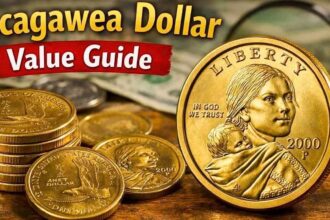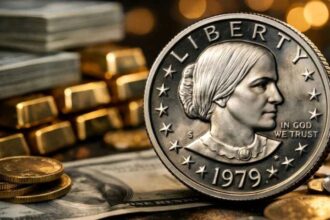

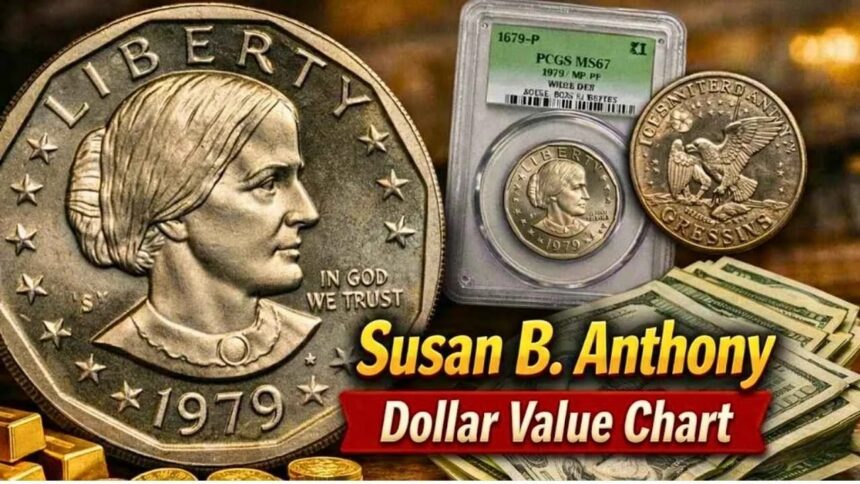
The Susan B. Anthony Dollar remains one of the most interesting modern U.S. coins ever produced. Introduced in 1979, the coin made history as the first American circulating coin to feature a real woman instead of a symbolic figure. Although the series lasted only a few years before being discontinued, collectors today actively search for rare Susan B. Anthony Dollars because certain versions have become surprisingly valuable.
- The History Behind the Susan B. Anthony Dollar
- Understanding the Susan B. Anthony Dollar Value Chart
- 1979-P Wide Rim Dollar
- 1981 Susan B. Anthony Dollars
- Rare Mint Errors Worth Big Money
- Why High-Grade Coins Sell for Over $10,000
- How to Identify Valuable Susan B. Anthony Dollars
- Why Collectors Still Love the Susan B. Anthony Dollar
- Final Thoughts
At first glance, these coins may look ordinary. Millions were produced, and many still appear in circulation or sit forgotten in old collections. However, a few rare varieties, mint errors, and high-grade examples have sold for thousands of dollars. In some cases, exceptional specimens have crossed the $10,000 mark at major coin auctions.
For collectors and treasure hunters alike, understanding which Susan B. Anthony Dollars are valuable can turn an overlooked coin into a major discovery.
The History Behind the Susan B. Anthony Dollar
The U.S. Mint introduced the Susan B. Anthony Dollar in 1979 to modernize American coinage and encourage the use of dollar coins in everyday commerce.
The coin honored women’s rights activist Susan B. Anthony, making it an important milestone in American history. Designed by Frank Gasparro, the obverse features Anthony’s portrait, while the reverse displays an eagle landing on the moon, adapted from the Apollo 11 mission insignia.
Despite its historical significance, the coin struggled in circulation because many people confused it with the quarter due to its similar size and color. Public acceptance remained low, and production stopped for regular circulation after 1981.
This short production run helped create collector demand over time, especially for rare varieties and coins preserved in exceptional condition.
Understanding the Susan B. Anthony Dollar Value Chart
Not every Susan B. Anthony Dollar is rare, but values can vary dramatically depending on the date, mint mark, condition, and error type.
Circulated coins from common years often remain worth only a small premium above face value. However, uncirculated examples, proof coins, and rare mint varieties can be worth hundreds or thousands.
Collectors pay the highest prices for coins with low populations in top mint-state grades. A coin preserved perfectly for decades becomes much scarcer than heavily circulated examples.
Professional grading companies play a major role in determining value because certified grades help establish rarity and market demand.
1979-P Wide Rim Dollar
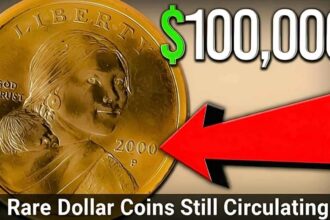
One of the most famous and valuable Susan B. Anthony Dollars is the 1979-P Wide Rim variety, also known as the “Near Date” coin.
On this version, the date appears much closer to the rim compared to standard 1979 Philadelphia coins. The spacing difference may seem small, but collectors consider it a major variety.
Because fewer Wide Rim coins were produced, they are far more desirable than regular versions. High-grade examples with strong details and minimal marks can sell for impressive prices.
Collectors often use magnification to compare the date placement carefully. The Wide Rim variety remains one of the first coins enthusiasts search for when examining Susan B. Anthony Dollars.
1981 Susan B. Anthony Dollars
The 1981 Susan B. Anthony Dollar series holds special importance because most coins from that year were never released widely into circulation.
Instead, they were produced mainly for collectors in mint sets and proof sets. As a result, finding 1981 coins in everyday use is relatively uncommon today.
Coins from the Philadelphia, Denver, and San Francisco mints all attract collector interest, especially in flawless condition. Proof coins with mirror-like surfaces and sharp details are particularly desirable.
Some high-grade certified examples have sold for thousands of dollars because so few survive in perfect condition.
Collectors continue searching for untouched mint-set coins hoping to uncover valuable top-grade specimens.
Rare Mint Errors Worth Big Money
Mint errors are one of the biggest reasons certain Susan B. Anthony Dollars become extremely valuable.
Double die errors occur when the die receives multiple impressions during production, causing visible doubling in lettering or design details. Strong examples can attract significant premiums from collectors.
Off-center strikes happen when the coin blank shifts during minting, resulting in part of the design missing. Dramatic off-center errors are especially collectible.
Some Susan B. Anthony Dollars also feature clipped planchets, die cracks, or wrong planchet errors. Coins struck on incorrect metal blanks can become particularly valuable because they are exceptionally rare.
Error coins with unique appearances often command strong auction prices because no two examples are exactly alike.
Why High-Grade Coins Sell for Over $10,000
Condition is one of the most important factors in determining a coin’s value. Even common Susan B. Anthony Dollars can become valuable if preserved in nearly perfect condition.
Coins graded Mint State 67, 68, or higher by professional grading companies are extremely difficult to find because small contact marks and scratches commonly occur during minting and storage.
Collectors competing for the finest-known examples can drive prices sharply upward. Some top-population Susan B. Anthony Dollars have exceeded $10,000 because so few flawless examples exist.
Proof coins are also judged carefully for surface quality, strike sharpness, and eye appeal. A single tiny imperfection can significantly impact market value.
This intense focus on condition explains why some ordinary-looking dollar coins become major auction highlights.
How to Identify Valuable Susan B. Anthony Dollars
Collectors searching for valuable coins should begin by checking dates and mint marks carefully.
The mint mark appears near the date and indicates where the coin was produced. Philadelphia coins may have a “P,” Denver coins a “D,” and San Francisco coins an “S.”
Inspect the rim spacing on 1979-P coins to identify the Wide Rim variety. A magnifying glass helps reveal subtle differences and potential doubling errors.
Pay attention to overall condition as well. Coins with sharp details, original luster, and minimal scratches usually carry stronger collector demand.
Avoid cleaning coins because polishing or scrubbing can permanently reduce value. Natural surfaces are generally preferred by collectors and grading companies.
Why Collectors Still Love the Susan B. Anthony Dollar
The Susan B. Anthony Dollar remains popular because it combines historical importance with modern rarity.
Unlike older rare coins that can cost enormous amounts upfront, many Susan B. Anthony Dollars remain affordable for beginning collectors. At the same time, the possibility of finding valuable varieties keeps the hunt exciting.
The series also represents an important chapter in American history, honoring a major figure in the women’s suffrage movement.
Collectors appreciate the challenge of finding rare varieties, high-grade examples, and unusual mint errors. Because the series lasted only a few years, completing a collection feels achievable while still offering valuable discoveries.
Final Thoughts
The Susan B. Anthony Dollar may have struggled in circulation decades ago, but today it stands as one of the most fascinating modern collectible coins in the United States. Rare varieties like the 1979-P Wide Rim, high-grade 1981 issues, and dramatic mint errors continue attracting strong demand from collectors.
While most Susan B. Anthony Dollars remain common, certain examples have reached impressive auction prices well above $10,000. For collectors in 2026, the excitement lies in knowing that valuable coins may still be hiding in old drawers, coin jars, or forgotten collections. A careful inspection of these historic dollar coins could reveal an unexpected treasure waiting to be discovered.