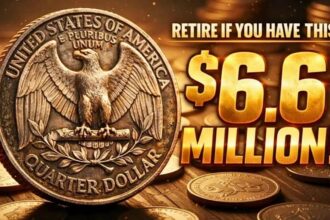

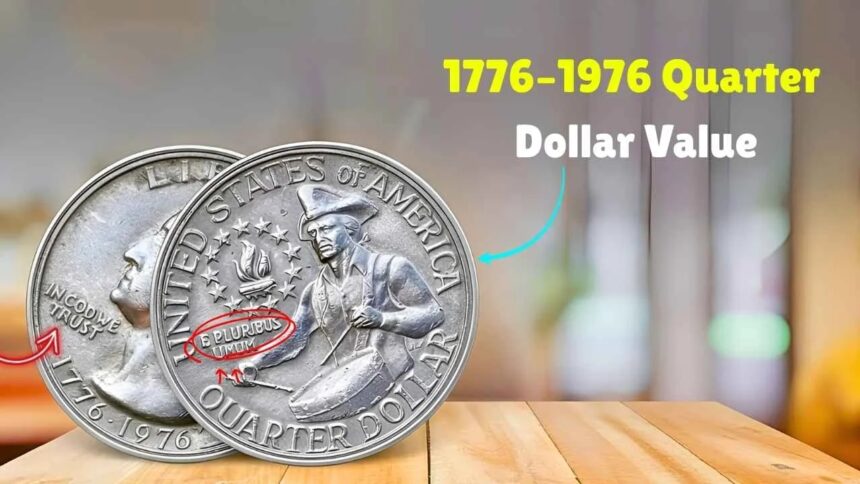
The 1776–1976 Bicentennial Quarter is one of the most recognizable coins in American history. Created to celebrate 200 years of United States independence, this special quarter quickly became popular with collectors and everyday Americans alike. Even decades after its release, millions of people still hold onto these coins because of their unique design and patriotic significance.
- Why the 1776–1976 Quarter Was Created
- Understanding Mint Marks and Coin Types
- Rare Silver Bicentennial Quarters
- Valuable Mint Errors to Watch For
- The Most Valuable Bicentennial Quarter Sales
- How Coin Condition Affects Value
- How to Spot a Valuable Bicentennial Quarter
- Why Bicentennial Quarters Remain Popular
- Final Thoughts
At first glance, most Bicentennial Quarters appear ordinary and are still worth only 25 cents in circulation. However, certain rare versions and mint errors can be worth hundreds, thousands, or even more to serious collectors. The challenge is knowing which coins are common and which hidden treasures deserve a closer look.
Many valuable Bicentennial Quarters remain tucked away in coin jars, inherited collections, and forgotten drawers. Learning how to identify these rare coins can turn an ordinary quarter into a surprisingly valuable discovery.
Why the 1776–1976 Quarter Was Created
The U.S. Mint introduced the Bicentennial Quarter to honor America’s 200th anniversary of independence. Instead of the standard eagle reverse design used on Washington quarters for decades, the special edition featured a Colonial drummer boy holding a torch surrounded by thirteen stars.
The front side still displayed George Washington, but the coin carried the dual date “1776–1976” rather than a single mint year. This distinctive feature instantly separated it from regular quarters.
Production began in 1975 and continued into 1976, with billions of coins struck at the Philadelphia, Denver, and San Francisco mints. Because so many were made, most examples remain common today. Still, a few rare varieties have become highly valuable among collectors.
Understanding Mint Marks and Coin Types
One of the first steps in determining a Bicentennial Quarter’s value is checking the mint mark. These small letters indicate where the coin was produced.
Coins without a mint mark were struck in Philadelphia. Coins with a “D” came from Denver, while “S” mint mark coins were produced in San Francisco.
San Francisco coins are especially important because many were struck as proof or silver collector versions rather than standard circulation pieces. Some of these silver quarters contain 40% silver, making them more valuable than regular copper-nickel examples.
Collectors should also understand the difference between business strike coins and proof coins. Proof coins feature sharper details, mirror-like surfaces, and were specially made for collectors.
Rare Silver Bicentennial Quarters
Most Bicentennial Quarters found in circulation are made from copper and nickel, but special collector editions struck in San Francisco contain 40% silver.
These silver quarters are heavier and often have a brighter appearance compared to regular versions. The edge of a silver coin lacks the visible copper stripe seen on standard clad quarters.
Although many silver Bicentennial Quarters are not extremely rare, coins preserved in perfect or near-perfect condition can command strong prices. High-grade silver proof versions have sold for hundreds or even thousands of dollars depending on certification and rarity.
Collectors often search through proof sets and inherited collections hoping to uncover valuable silver examples that have remained untouched for decades.
Valuable Mint Errors to Watch For
Mint errors are one of the biggest reasons certain Bicentennial Quarters become highly valuable. These mistakes occur during the production process and can dramatically increase collector demand.
Double die errors are among the most popular. These coins display noticeable doubling in the lettering, date, or design elements because the die received multiple impressions during manufacturing.
Off-center strikes are another valuable error type. These coins were struck improperly, causing part of the design to appear missing or shifted dramatically.
Some Bicentennial Quarters also feature clipped planchets, die cracks, or missing clad layers. Rare and visually striking errors can sell for impressive amounts at auctions, especially if professionally graded.
Because mint errors are accidental, every piece is unique in some way, making them especially appealing to collectors.
The Most Valuable Bicentennial Quarter Sales
While most Bicentennial Quarters remain common, a few extraordinary examples have achieved remarkable auction prices.
Certain high-grade proof quarters graded near perfection by professional grading companies have sold for thousands of dollars. Coins with rare mint errors or unusual striking characteristics can bring even higher premiums.
One reason these coins become so valuable is population rarity. If only a few examples exist in top condition, competition among collectors can drive prices sharply upward.
Coins preserved in original mint packaging often maintain stronger value because they are less likely to have scratches or wear from circulation.
Collectors continue searching for overlooked treasures because valuable coins sometimes appear in old collections where owners never realized their true worth.
How Coin Condition Affects Value
Condition plays a major role in determining the value of any Bicentennial Quarter. Even a rare variety may lose much of its worth if heavily damaged or worn.
Coins in uncirculated condition show little to no wear and often retain their original mint shine. Proof coins with deep mirror surfaces and sharp details are especially desirable.
Professional grading services use detailed scales to evaluate coin quality. Higher grades generally translate into significantly higher market values.
Cleaning coins is strongly discouraged because improper cleaning can scratch surfaces and reduce collector appeal. Many experienced collectors prefer coins with natural aging rather than polished appearances.
Proper storage is equally important. Protective holders and climate-controlled environments help preserve coin quality over time.
How to Spot a Valuable Bicentennial Quarter
Finding a valuable Bicentennial Quarter starts with careful observation. Begin by checking the mint mark and looking for signs of silver composition.
The coin’s edge provides an important clue. Standard clad quarters display a copper-colored stripe along the edge, while silver versions appear solid silver throughout.
Use a magnifying glass to inspect the date, lettering, and design details for doubling or unusual features. Pay attention to off-center strikes, missing details, or other visible abnormalities.
Weight can also help identify valuable coins. Silver quarters weigh slightly more than standard clad versions, making digital scales useful tools for collectors.
If a coin appears unusual or especially well-preserved, professional authentication may be worthwhile.
Why Bicentennial Quarters Remain Popular
The Bicentennial Quarter continues attracting collectors because it combines history, nostalgia, and the excitement of treasure hunting. Many Americans remember receiving these coins in circulation during the nation’s 200th anniversary celebration.
Unlike older rare coins that are difficult to obtain, Bicentennial Quarters remain accessible to beginners. People still occasionally find them in pocket change, making the search feel exciting and achievable.
The patriotic design also adds emotional value. The drummer boy reverse stands out as one of the most iconic quarter designs ever produced by the U.S. Mint.
As interest in coin collecting continues growing, demand for rare Bicentennial varieties remains strong among both casual hobbyists and serious investors.
Final Thoughts
The 1776–1976 Bicentennial Quarter is far more than just spare change. While most examples are common, certain silver versions, high-grade proofs, and rare mint errors can be worth surprisingly large amounts of money. Collectors continue searching for these hidden treasures because valuable coins still appear in circulation, coin jars, and old family collections.
Taking a closer look at a Bicentennial Quarter could lead to an exciting discovery. A coin that once purchased a simple item decades ago may now hold significant collector value. For many enthusiasts, the thrill of uncovering a rare quarter is what makes coin collecting such a rewarding hobby.