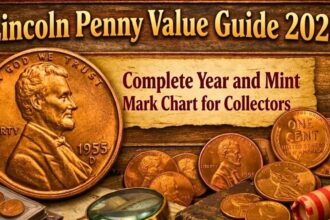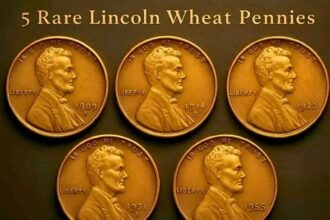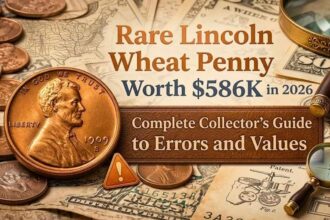

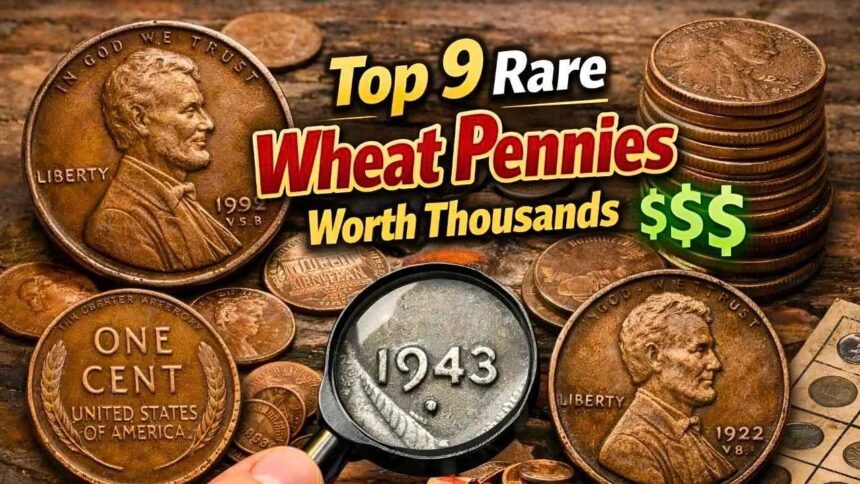
Lincoln Wheat Pennies are among the most loved coins in American history. Minted between 1909 and 1958, these pennies were once part of everyday life, passing through shops, banks, and households across the country. Today, some of these small copper coins are worth far more than one cent. In 2026, collectors continue hunting for rare Wheat Pennies that can sell for hundreds, thousands, or even hundreds of thousands of dollars.
What makes Wheat Pennies so exciting is the possibility that valuable coins may still be hidden inside old jars, coin albums, estate collections, or forgotten drawers. Certain dates, mint marks, and minting errors have become legendary in the coin collecting world. Knowing how to identify these rare pennies can help collectors avoid overlooking hidden treasures.
Why Wheat Pennies Are Still Popular
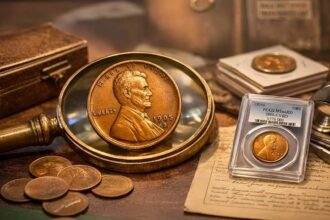
The Lincoln Wheat Penny was introduced in 1909 to honor the 100th anniversary of Abraham Lincoln’s birth. Designed by Victor David Brenner, the coin features Lincoln’s portrait on the front and two wheat stalks on the reverse side. It was the first regular U.S. coin to feature a real historical figure instead of symbolic artwork.
Collectors continue to love Wheat Pennies because they combine history, rarity, and affordability. Unlike expensive gold coins that are difficult for beginners to collect, Wheat Pennies remain accessible to many hobbyists. At the same time, some rare examples are valuable enough to attract serious investors.
1909-S VDB Wheat Penny
The 1909-S VDB is considered one of the most important Lincoln cents ever produced. Minted in San Francisco during the first year of the series, the coin carries the initials “VDB” on the reverse side to honor designer Victor David Brenner.
Soon after release, criticism over the large initials forced the Mint to remove them, leaving only a limited number of these coins in circulation. Because of its low mintage and historical importance, the 1909-S VDB became one of the most desirable Wheat Pennies ever made.
Collectors can identify this coin by looking for the “S” mint mark below the date and the “VDB” initials near the bottom of the reverse side. Even worn examples are valuable, while high-grade coins can sell for enormous prices.
1914-D Wheat Penny
Another major rarity is the 1914-D Wheat Penny from the Denver Mint. Although it may look ordinary at first glance, its low mintage and heavy circulation make it difficult to find today.
Most surviving examples show significant wear because they circulated heavily during the early twentieth century. Sharp, well-preserved coins are much scarcer and highly valuable.
Collectors should carefully check the small “D” mint mark beneath the date. Counterfeit versions exist because some people alter common pennies by adding fake mint marks. Professional authentication is recommended for expensive examples.
1922 No D Wheat Penny
The 1922 No D Wheat Penny is one of the most famous mint error coins in U.S. history. During 1922, all Lincoln cents were struck at the Denver Mint, meaning every coin should display a “D” mint mark.
However, excessive die wear caused some coins to lose the visible mint mark entirely. These unusual “No D” coins quickly became collector favorites because they represent a genuine minting mistake.
Authentic examples display specific strike characteristics and are carefully studied by collectors. High-grade examples continue bringing strong prices in 2026.
1931-S Wheat Penny
The 1931-S Wheat Penny became rare because of its low production during the Great Depression. Economic difficulties reduced the need for coin production, leading to smaller mintages that year.
Unlike some rare pennies that circulated heavily, many 1931-S coins were saved early by collectors who recognized their scarcity. Even so, top-quality examples with original red color remain difficult to find.
Collectors still consider the 1931-S an essential part of a complete Wheat Penny collection.
1943 Copper Wheat Penny
The 1943 copper penny is one of the most legendary coins in American numismatics. During World War II, the U.S. Mint switched from copper pennies to zinc-coated steel cents to conserve copper for wartime production.
As a result, nearly all 1943 pennies appear silver-colored. However, a few leftover copper planchets from 1942 accidentally remained in the presses and were struck with the 1943 date.
These rare copper pennies became some of the most valuable coins ever discovered. Some examples have sold for hundreds of thousands of dollars at auction.
Collectors often use magnets as a quick test because steel pennies stick to magnets while genuine copper examples do not.
1944 Steel Wheat Penny
Another famous wartime error is the 1944 steel penny. After steel production ended in 1943, a few leftover steel planchets were accidentally used in 1944 when copper production resumed.
This mistake created one of the rarest Wheat Pennies in existence. Genuine 1944 steel cents are extremely valuable and highly sought after by collectors.
The easiest way to identify one is by its silver-colored appearance and magnetic properties.
1955 Doubled Die Wheat Penny
The 1955 Doubled Die penny remains one of the most visually dramatic error coins ever released into circulation. The front side displays strong doubling on the lettering and date, especially in “LIBERTY” and “IN GOD WE TRUST.”
The error occurred during die production and became famous because the doubling is easy to see without magnification. Thousands entered circulation before the Mint noticed the mistake, allowing ordinary Americans to discover them in pocket change during the 1950s.
Collectors continue searching for this legendary error coin today.
1909-S Wheat Penny Without VDB
Although less famous than the VDB version, the regular 1909-S Wheat Penny is also highly collectible. It still had a relatively low mintage and remains an important key date within the series.
Collectors often seek both the VDB and non-VDB versions to complete their collections. High-grade examples continue bringing impressive prices in the modern coin market.
1926-S Wheat Penny
The 1926-S Wheat Penny is another difficult coin to find in excellent condition. Many examples circulated heavily and developed worn details over time.
Collectors especially value coins showing strong wheat lines on the reverse side and clear details on Lincoln’s portrait. High-grade red examples are particularly scarce and valuable.
How to Identify Valuable Wheat Pennies
Collectors searching for rare Wheat Pennies should carefully inspect dates, mint marks, and overall condition. A magnifying glass can help reveal doubled lettering, missing mint marks, or unusual design details.
Condition is extremely important. Coins with strong luster, minimal wear, and original red copper color are generally worth more than dark or damaged examples.
Collectors should avoid cleaning old coins because polishing can permanently reduce their value.
If a coin appears rare or unusual, professional grading and authentication are recommended before selling or purchasing.
Final Thoughts
Rare Lincoln Wheat Pennies continue capturing the attention of collectors in 2026 because they combine history, rarity, and the excitement of discovery. From the legendary 1943 copper cent to the famous 1909-S VDB and 1955 Doubled Die, these small coins remain some of the most desirable treasures in American numismatics.