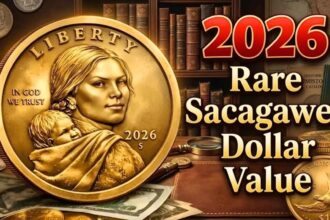

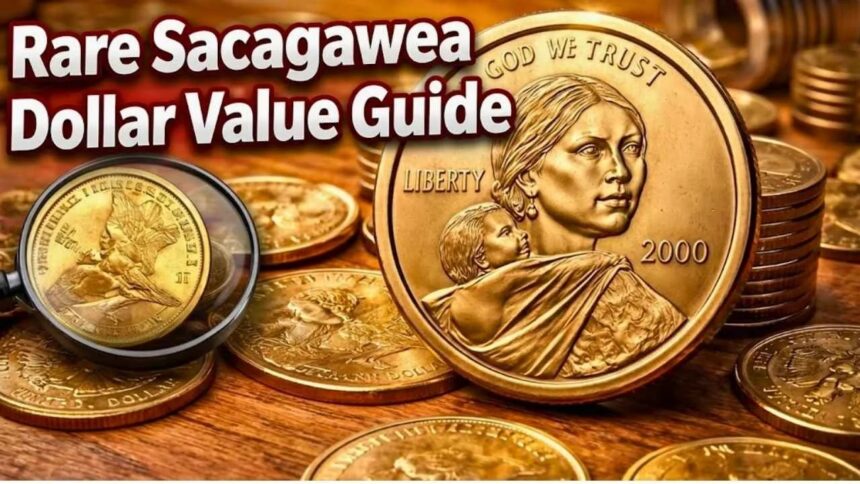
The Sacagawea Dollar has become one of the most fascinating modern coins in American numismatics. Introduced in 2000, the coin was designed to replace the Susan B. Anthony Dollar and quickly gained attention because of its distinctive golden color and tribute to the Native American guide Sacagawea. Although millions were minted, a small number of rare Sacagawea Dollars have become highly valuable collector items worth far more than their one-dollar face value.
- The Story Behind the Sacagawea Dollar
- The Famous 2000-P Mule Error
- Cheerios Sacagawea Dollars
- Wounded Eagle Error Coins
- Why Condition Matters So Much
- Rare Mint Errors Collectors Search For
- How to Identify Valuable Sacagawea Dollars
- Why Sacagawea Dollars Remain Popular in 2026
- Building a Sacagawea Dollar Collection
- Final Thoughts
In 2026, collector interest in these coins continues rising as rare varieties, mint errors, and high-grade examples achieve impressive auction prices. Some collectors search bank rolls and old collections hoping to uncover hidden treasures, while others invest heavily in elite certified specimens.
The excitement surrounding Sacagawea Dollars comes from the fact that many valuable examples still look ordinary to the untrained eye. Knowing what to look for can make the difference between overlooking a rare coin and discovering a small fortune.
The Story Behind the Sacagawea Dollar
The U.S. Mint introduced the Sacagawea Dollar in 2000 to create a more practical and visually distinctive dollar coin.
The obverse design features Sacagawea carrying her infant son Jean Baptiste, while the reverse originally displayed a soaring eagle. The coin’s golden appearance comes from a special manganese-brass outer layer, although the coin itself contains no actual gold.
Despite the fresh design and historical significance, the coin never fully replaced paper dollar bills in everyday commerce. As a result, many Sacagawea Dollars were stored away in rolls, bags, and collections rather than heavily circulated.
This widespread saving of coins created an interesting collector market where condition and rare varieties became extremely important.
The Famous 2000-P Mule Error
No Sacagawea Dollar is more legendary than the famous 2000-P mule error.
This extraordinary mistake occurred when the obverse die of a Washington quarter was accidentally paired with the reverse die of a Sacagawea Dollar. The result was a coin featuring George Washington on the front and the Sacagawea Dollar eagle design on the reverse.
Only a very small number of these mule errors are known to exist, making them among the rarest modern U.S. coins ever discovered.
Collectors immediately recognized the coin’s historical importance and rarity. Some authenticated examples have sold for well over $100,000, while elite specimens continue attracting massive interest in 2026.
The easiest way to identify this error is simple: if a golden Sacagawea Dollar displays Washington’s portrait instead of Sacagawea, it could be one of the most valuable modern coins in existence.
Cheerios Sacagawea Dollars
Another highly collectible variety is the 2000-P “Cheerios Dollar.”
When the Sacagawea Dollar launched in 2000, a promotional partnership placed special coins inside cereal boxes as part of a nationwide marketing campaign. At first, collectors believed these coins were ordinary issues.
Later, experts discovered that the eagle’s tail feathers on some promotional coins displayed enhanced detail not found on standard circulation versions.
This subtle design difference transformed the Cheerios Dollar into one of the most sought-after modern varieties.
Collectors often examine the tail feather details carefully under magnification to identify genuine examples. Certified Cheerios Dollars in high grades can sell for substantial amounts.
Wounded Eagle Error Coins
The “Wounded Eagle” Sacagawea Dollar remains another favorite among collectors.
This error appears as a raised line crossing the eagle’s body on the reverse side, creating the appearance of a spear or scratch through the bird.
The unusual marking resulted from die damage during production and became famous after collectors noticed multiple examples displaying the same feature.
Because the error is visually distinctive and connected to a specific die variety, demand remains strong among modern coin enthusiasts.
Well-preserved examples often command strong premiums above ordinary Sacagawea Dollars.
Why Condition Matters So Much
Condition plays a huge role in determining Sacagawea Dollar values.
Many coins were stored loosely in bags and rolls, leading to scratches, contact marks, and dull surfaces. Perfectly preserved examples are surprisingly difficult to find.
Professional grading companies evaluate coins based on luster, strike quality, surface preservation, and eye appeal. Coins receiving elite Mint State grades often become dramatically more valuable than average examples.
A single point difference on the grading scale can sometimes increase value by thousands of dollars.
Proof coins struck for collectors are also popular because of their mirror-like surfaces and sharp details. High-grade proof examples remain especially desirable in the modern coin market.
Rare Mint Errors Collectors Search For
Mint errors are one of the biggest reasons certain Sacagawea Dollars become highly valuable.
Double die errors display noticeable doubling in lettering or design elements due to mistakes during die production.
Off-center strikes occur when the coin blank shifts during minting, causing part of the design to appear missing or misaligned.
Some Sacagawea Dollars were also struck on incorrect planchets intended for other coins. These wrong planchet errors are especially rare and can bring enormous prices when authenticated.
Clipped planchets, die cracks, and missing edge details also attract collector attention.
Because every mint error is unique in some way, collectors continue searching through old rolls and collections hoping to uncover rare discoveries.
How to Identify Valuable Sacagawea Dollars
Collectors searching for valuable Sacagawea Dollars should begin by checking the date, mint mark, and overall condition.
The mint mark appears near the date on the obverse side. Philadelphia coins feature a “P,” while Denver coins carry a “D.”
Using a magnifying glass helps reveal important details such as doubled lettering, die cracks, or the enhanced tail feathers seen on Cheerios Dollars.
Collectors should also inspect coins for unusual color, weight, or strike characteristics that may indicate wrong planchet errors.
Avoid cleaning coins because polishing or scrubbing can permanently damage surfaces and reduce collector value.
Coins appearing especially unusual or valuable should be professionally authenticated before sale or purchase.
Why Sacagawea Dollars Remain Popular in 2026
Sacagawea Dollars continue attracting collectors because they represent an important chapter in modern American coinage.
The series honors Native American history while also offering exciting opportunities for discovering valuable varieties and mint errors.
Unlike some older rare coins that require enormous budgets, many Sacagawea Dollars remain affordable for beginner collectors. At the same time, elite rarities like the mule error provide serious investment potential.
Social media, online auctions, and collector communities have also helped increase awareness of rare Sacagawea Dollar varieties in recent years.
The possibility that valuable examples still remain hidden in circulation keeps excitement alive among collectors in 2026.
Building a Sacagawea Dollar Collection
Many collectors begin by assembling date-and-mint sets covering every year of Sacagawea Dollar production.
Others focus specifically on rare errors, proof coins, or top-grade certified examples.
Learning the key varieties and studying authentic coins helps collectors make smarter purchasing decisions.
Protective storage is important because the golden surfaces of Sacagawea Dollars can easily develop marks if handled carelessly.
Patience and careful research often lead to the most rewarding discoveries in coin collecting.
Final Thoughts
The Sacagawea Dollar has grown from a modern circulation coin into one of the most exciting collectible series in American numismatics. Rare varieties like the 2000-P mule error, Cheerios Dollars, and Wounded Eagle errors continue attracting major attention from collectors in 2026.
Although millions of Sacagawea Dollars were produced, only a small number possess the rarity and condition needed to command truly impressive values. For collectors, the thrill lies in knowing that a valuable hidden treasure could still be waiting inside an old coin jar, bank roll, or forgotten collection.